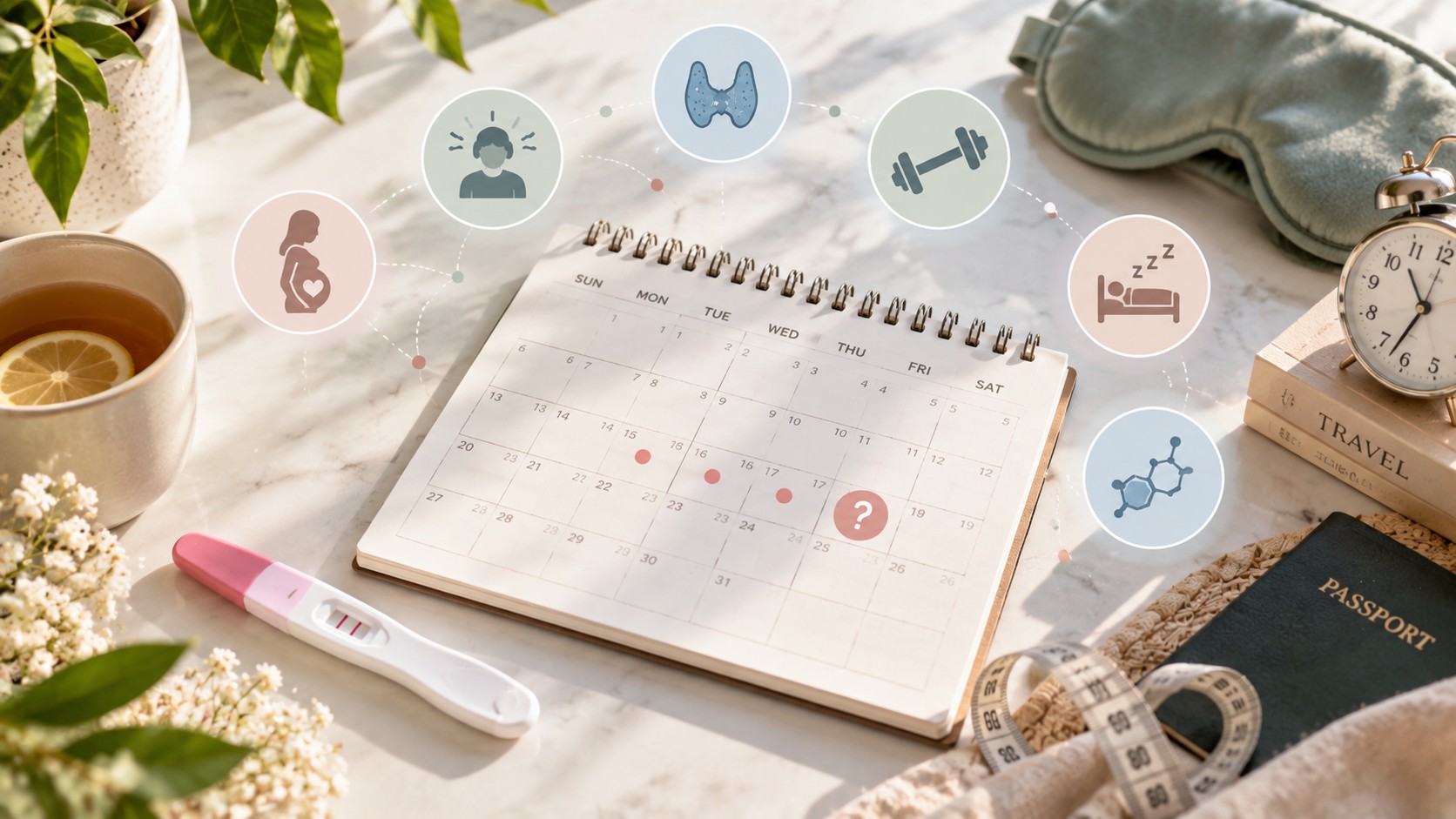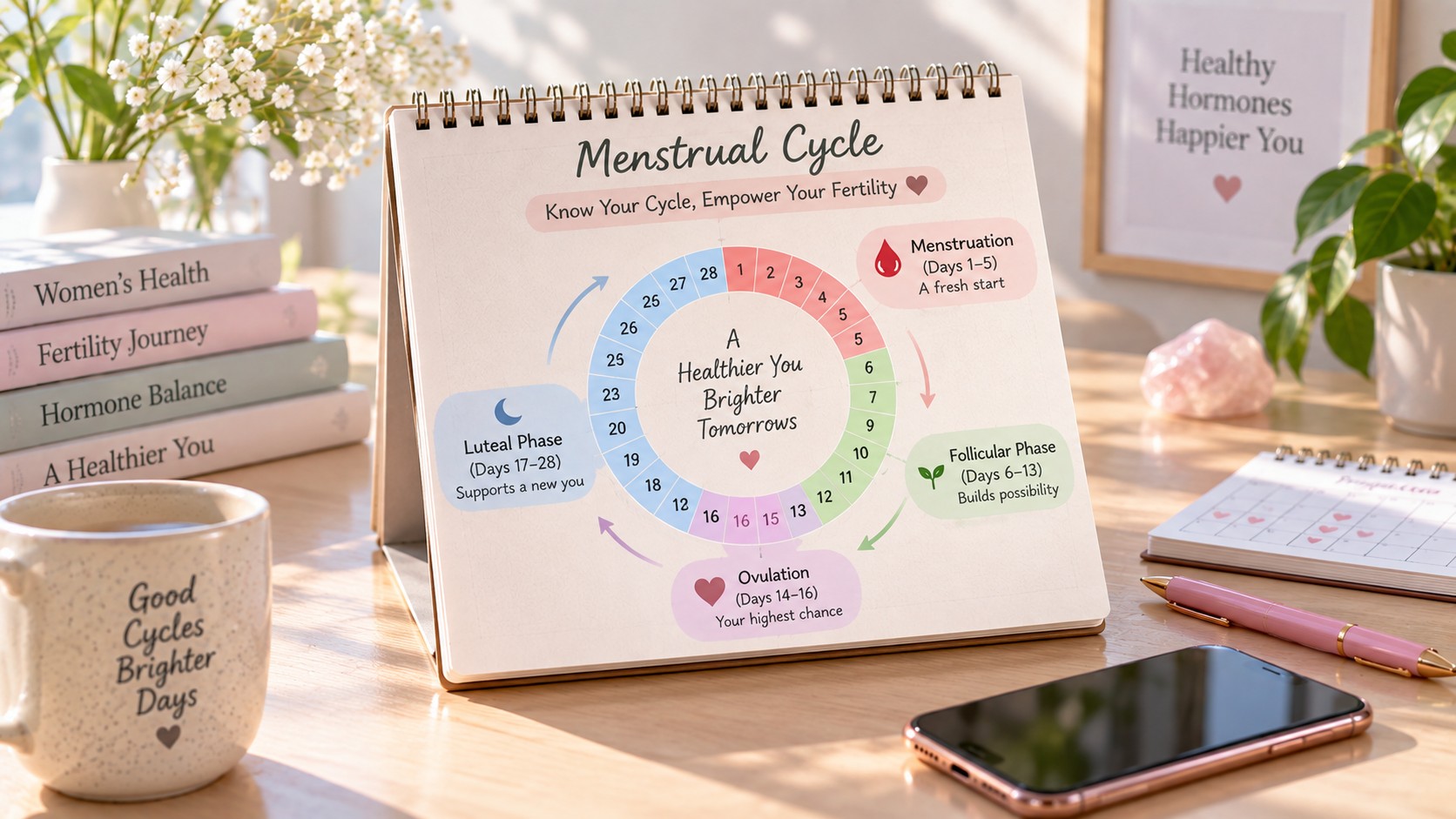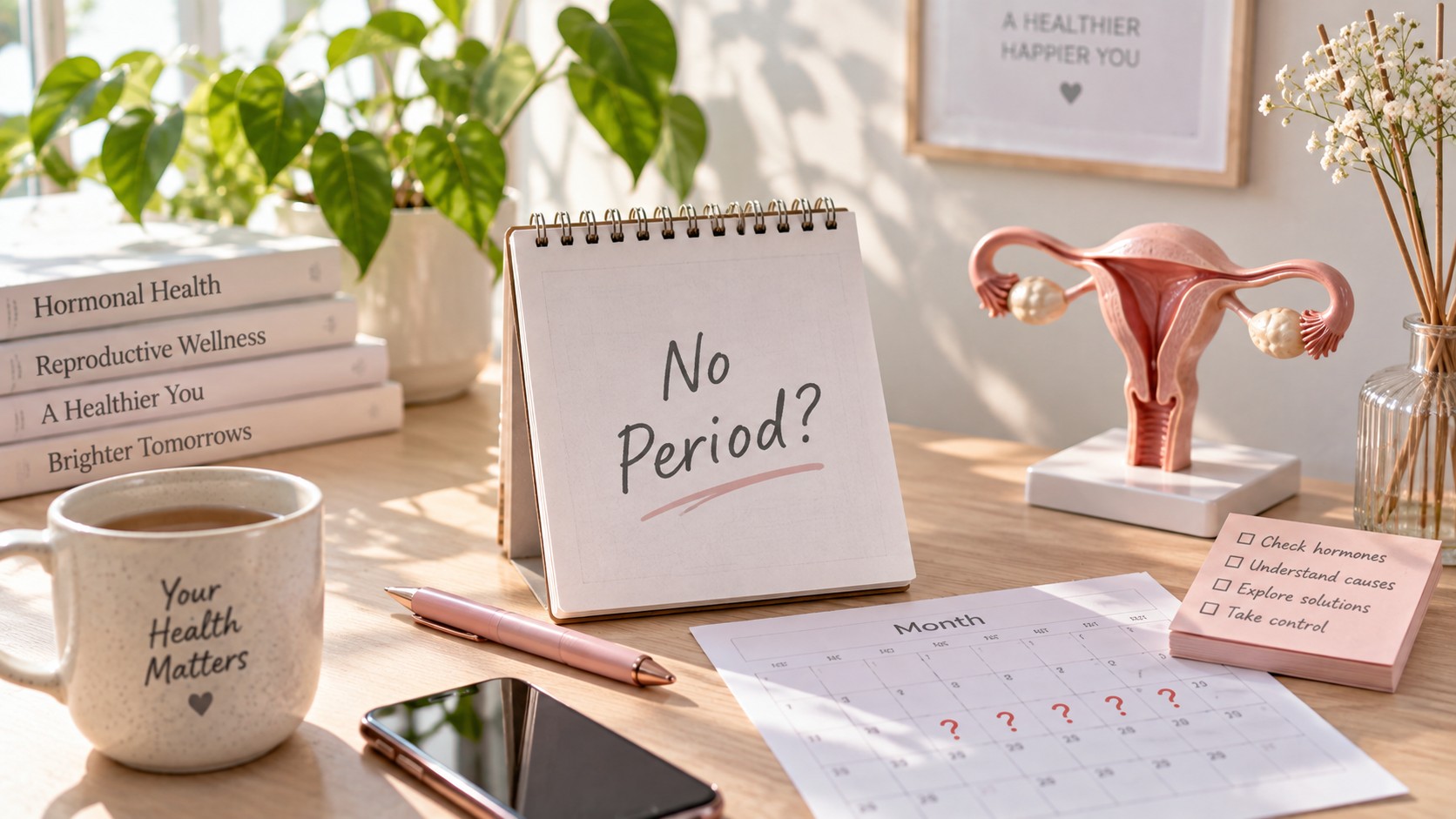
Going a month without a period can feel unsettling. Going three months or more without one has a name: amenorrhea. It isn't a diagnosis in itself so much as a signal — a sign that something in your body's hormonal rhythm has paused, and it's worth understanding why.
The good news is that missed periods are one of the more common reproductive-health concerns women bring to a clinician, and there are usually clear, identifiable reasons behind them.
Amenorrhea simply means the absence of menstrual periods. It's generally grouped into two types:
This article focuses mainly on secondary amenorrhea, since it's the pattern most women searching this topic are experiencing.
Always the first thing to rule out if you're sexually active and periods have stopped. A home pregnancy test is a simple starting point.
Polycystic ovary syndrome is one of the leading causes of missed or very infrequent periods, due to irregular or absent ovulation. Read more about PCOS signs and causes here.
The body needs a certain amount of energy availability to sustain ovulation. Very low body weight, restrictive eating patterns, or very low body fat can cause the brain to pause reproductive hormone signals.
Intense training, especially combined with insufficient caloric intake, can suppress ovulation. This is sometimes seen in competitive athletes but can affect anyone who exercises heavily relative to their nutrition.

Ongoing high stress can affect the hypothalamus, the part of the brain that helps regulate the hormones driving ovulation, sometimes pausing periods altogether.
Both thyroid dysfunction and, less commonly, elevated prolactin levels from the pituitary gland can stop ovulation and periods. These usually require blood testing to identify.
Some women experience a delay of a few months before natural cycles resume after stopping hormonal contraception. This is usually temporary.
In some women, periods stop earlier than expected due to declining ovarian function. This is less common but worth evaluating, especially alongside other symptoms.
A clinician will typically start with a pregnancy test, a review of your cycle and health history, and blood tests to check hormone levels (including thyroid hormones and, when relevant, prolactin and androgens). An ultrasound may also be used to assess the ovaries. This step-by-step process is how the specific cause — rather than a guess — gets identified.
Sometimes a provider may also discuss a short course of a progesterone medicine to see whether a bleed follows. The response gives helpful clues about your estrogen levels and whether the uterine lining is building up as expected. This is simply one of the options a doctor may discuss, based on your own history.
One late or skipped period now and then can happen to anyone. It is a good idea to book an appointment if:
Getting checked early is not about expecting bad news. It is about finding the reason sooner, so you can start the right kind of care.
A period is usually the visible end of a cycle in which ovulation happened. When periods stop, it often means ovulation has paused too, and without an egg being released, pregnancy cannot happen that month. That can feel discouraging, but it also gives you and your provider a clear goal: helping your body return to regular ovulation.
For many women, cycles return once the root cause is addressed. That may mean eating enough to fuel your activity, easing back on very intense training, treating a thyroid issue, or managing PCOS. If PCOS is part of your picture, our article on PCOS and irregular ovulation explains how it affects egg release. When ovulation does not come back on its own, a doctor may discuss medications that help trigger ovulation.
AGO Mom is designed to help support hormonal balance and reproductive wellness for women preparing their bodies for pregnancy, including those working through a period of irregular or missed cycles.
Message AGO Fertility Care and share how long it's been since your last period, along with any recent weight, exercise, or stress changes. We'll help you understand possible next steps and options for support.
Chat With AGO on WhatsApp